
What 100 Podcasts and 30 Years in Broadcast Taught This Producer (with Marc Aflalo)
Most podcasters spend hours preparing question lists. Marc Aflalo has produced more than 100 podcasts across 30 years in radio, TV, live events, and digital media. He has been doing it since before the word "podcast" existed. And his single biggest lesson is this: interviews get answers, but conversations create moments that move people to act.
Marc Aflalo is the CEO of Aflalo Communications and has spent three decades in broadcast, producing shows, engineering live events, and helping creators develop their voice and brand across borders.
In this episode of Podcasting Secrets with host Nathan Gwilliam, Marc reveals how one unscripted conversation generated $38,000 in overnight product sales, why throwing out the question list is the most underrated podcasting strategy, how broadcasting live from events with real crowd noise creates authenticity studio recordings cannot match, and how technology lets podcasters build audiences across borders without a single flight.
Want to create episodes that actually connect and convert? Stop reading questions. Start listening. Subscribe and follow Podcasting Secrets on Apple, Spotify, and YouTube for weekly insights from creators and producers building shows that grow and convert.
Follow, Like & Subscribe:
Podcasting Secrets: Website: podcastingsecrets.com | YouTube: @podcasting-secrets | Instagram: @podcastingsecrets | LinkedIn: poduppodcasting | Apple | Spotify Nathan Gwilliam: LinkedIn: @NathanGwilliam
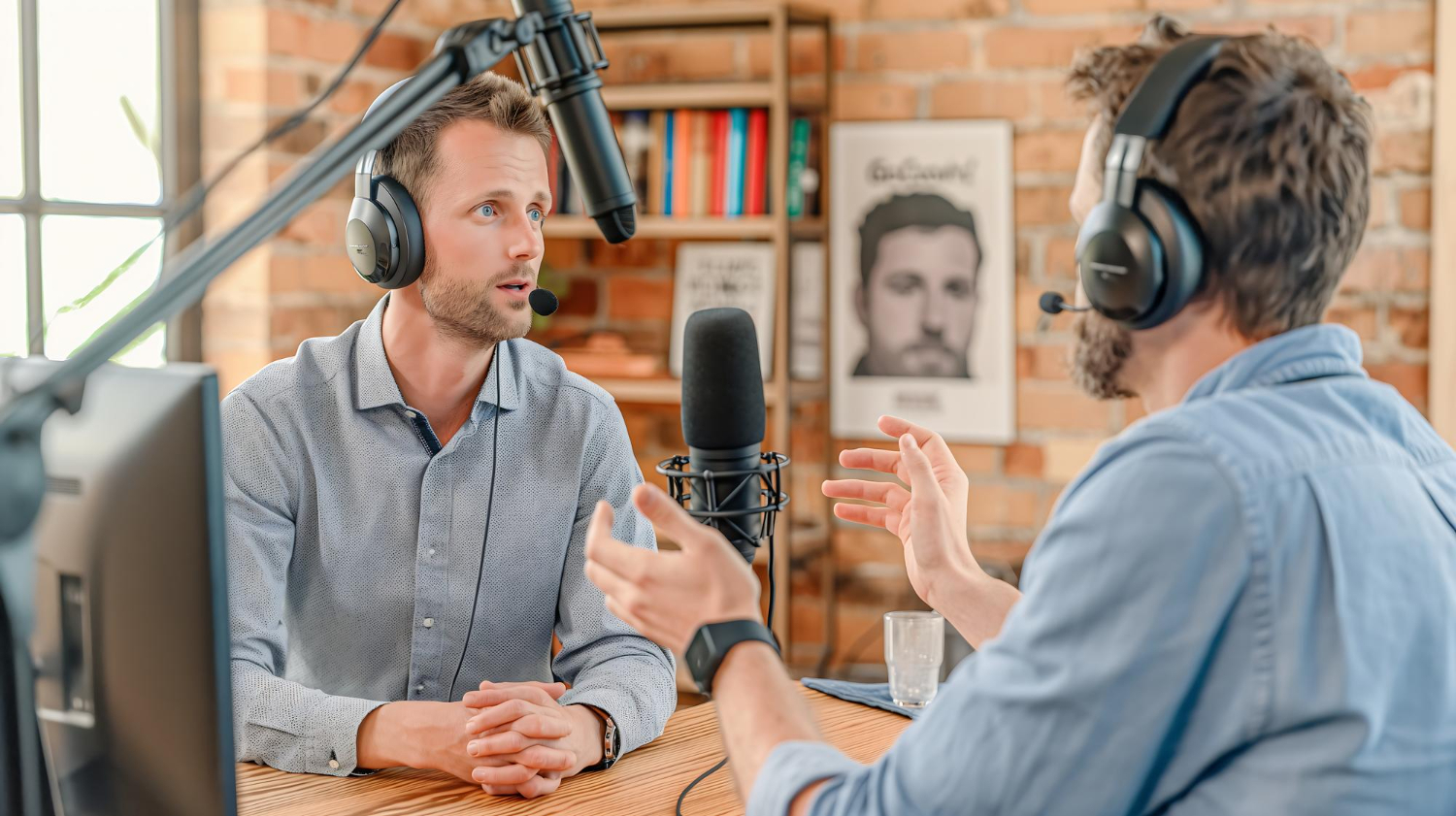
Why the Best Podcast Hosts Stop Interviewing and Start Having Conversations (with Marc Aflalo)
Most podcasters prepare a list of questions, send it to the guest ahead of time, and work through every item in order. That approach feels safe. It feels professional. But it is also why so many episodes sound the same, and why listeners tune out before the halfway point.
In this episode of Podcasting Secrets with host Nathan Gwilliam, Marc Aflalo, CEO of Aflalo Communications and a 30-year veteran of radio, TV, live events, and digital media, explains exactly what separates a forgettable interview from a conversation that moves people to act. He also shares the story of one unscripted conversation that generated $38,000 in overnight product sales, and how it happened because the host stopped following the list.
Table of Contents
What You Will Get From This Article
Quick Answer: What Is the Difference Between an Interview and a Conversation in Podcasting?
Why Conversations Outperform Interviews
The $38,000 Story: What Happens When You Actually Listen
The Problem With Question Lists
How to Podcast Live From Events
Why Your Perspective Is Enough to Stand Out
How Technology Expands Your Reach Across Borders
Common Mistakes Podcasters Make in Guest Episodes
A Simple 5-Step Plan for More Authentic Conversations
FAQ
What This Means for Your Show
Key Takeaways
Publishing Notes
What You Will Get From This Article
The difference between an interview and a conversation, and why it matters for engagement and sales.
A field-tested approach for letting conversations go off-script without losing direction.
Practical strategies for podcasting live from events, including what gear to use and how to frame the experience.
Quick Answer: What Is the Difference Between an Interview and a Conversation in Podcasting?
An interview follows a prepared list of questions and stays on a predetermined path. A conversation follows the guest. The host listens actively and pursues whatever surfaces in the moment, even if it goes in a completely different direction. The result is more authentic, more unpredictable, and far more likely to produce moments that listeners remember and share.
Why Conversations Outperform Interviews
Marc has been producing audio content since before the word "podcast" existed. He started in radio at 16, stitching together audio files when there were no recording platforms, no AI tools, and no podcast aggregators. After 30 years and more than 100 shows produced, his clearest observation is that the medium rewards humanity over preparation.
Listeners can tell when a host is reading from a list. There is a rhythm to it that does not feel like two people talking. And guests can tell too. When they know a prepared question is coming regardless of what they just said, they stop sharing the real stuff. They give the polished answer, the one they have given ten times before.
Marc says the only way conversations come across as authentic, especially now, is by being human. By breathing. By hesitating. By following curiosity wherever it leads. That is what creates the kind of connection that moves listeners to act. Building that kind of authority in your niche does not happen from polished content alone. It happens from episodes that feel genuinely real.
The $38,000 Story: What Happens When You Actually Listen
Marc tells one story that makes the whole principle concrete.
He was recording with Glydance, a company that makes a navigation device for blind and low-vision users. Before the conversation, he had questions ready about the product's features. Then the guest said something unexpected. Marc listened. He followed up. The list went out the window.
They ended up talking about the mission behind the product, what it meant for people losing their vision, and the hurdles the founders had jumped to get it made. The guest got emotional. The audience felt it.
The next day, Glydance received $38,000 in product sales. Not from an ad. Not from a sponsorship package. From one conversation that made people feel something. That result did not come from a question list. It came from a host who was paying attention.
The Problem With Question Lists
Marc is not opposed to preparation. He researches who he is talking to and knows the subject. But he draws a firm line between preparation and scripting.
When you send a guest a list of questions, they rehearse. They write out answers. By the time you record, you are both reading from a performance rather than having a real exchange.
He tells companies upfront: there is no list. And then he adds what actually matters. If something the guest says catches his interest and takes the conversation somewhere unexpected, he is going that way. Listening, Marc says, is the biggest skill gap in podcasting. Most hosts are so focused on the next question that they miss what the guest is actually saying, and what that guest might share if someone followed up.
How to Podcast Live From Events
One of the more useful parts of this conversation covers podcasting at conferences. Marc has produced shows from events across multiple countries, including a full live broadcast from Vienna with two cameras, an iPhone, and a couple of iPads that looked like a proper production crew.
His advice: stop looking for a quiet room and lean into the environment. The crowd noise is not a problem. It is proof. It tells the listener you are actually there. Authenticity that a studio cannot replicate.
Practically, he suggests taking two microphones, walking through the event, and describing what you see. Stop at booths. Let the audio breathe. For listeners who could not be there, that becomes the next best thing. Sustainable podcast growth often comes from episodes that feel different from everything else in the feed. A live event episode done well delivers exactly that.
Why Your Perspective Is Enough to Stand Out
Marc addresses the saturation question directly. Many aspiring podcasters hold back because they believe the market is too crowded.
He disagrees with the premise. His answer is the same one you would give about books or television. People are still writing books and creating new shows, not because there is a shortage of content, but because there is always room for a new perspective. Your lived experience is not the same as anyone else's. That difference, small as it sounds, is the entire basis for why podcasts continue to work.
The real barrier is not saturation. It is imposter syndrome. Marc says he has suffered from it himself. The fix is not a better strategy. It is getting one response from one listener who says the episode helped, and using that as fuel to keep going.
How Technology Expands Your Reach Across Borders
Marc is based in Montreal. He has one local client. The rest of his work is spread across Canada, the United States, and the United Kingdom. That is not unusual for him. He has been working remotely and producing across borders for decades.
His point here is not about remote work. It is about what technology has done for reach. He has covered conferences in Africa without flying there. He has co-hosted a show with someone in Manchester and another in Glasgow, from his home in Montreal, with audio quality that sounds like everyone is in the same room. He has brought a live conference experience to an audience that otherwise would have had no access to it.
The internet is a borderless platform. That is not a cliché. It is the operating reality for podcasters who want to build audiences beyond their own city, country, or time zone. Technology is the equalizer. It removes geography as a barrier, and for podcasters who understand that, the potential audience is the entire connected world. Podcasters who build networks globally understand this principle better than most.
Common Mistakes Podcasters Make in Guest Episodes
Most hosts over-prepare. They write 15 questions, send them in advance, and then sit through a recording session where both people are just waiting to get to the next item on the list. The conversation never finds a natural rhythm.
The second mistake is chasing questions instead of listening to answers. A guest drops something interesting mid-sentence, and the host keeps going with the script. That moment, the one that might have led somewhere memorable, disappears.
Third, many podcasters think live or remote recording requires studio conditions. They look for the quietest corner at an event, set up in a closet, and produce an episode that could have been recorded anywhere. The context gets stripped out along with the noise.
Finally, hosts assume that doing what everyone else does is the safest play. It is actually the riskiest. What everyone else does gets ignored.
A Simple 5-Step Plan for More Authentic Conversations
Step 1: Prepare for the person, not the topic. Research who your guest is. What have they built? What have they struggled with? What is the one thing most people never ask them? Go in knowing the person, not just the subject.
Step 2: Ditch the question list in the recording. Have notes for yourself if you need them. But do not let a guest know there is a fixed sequence. The moment they sense a list, they stop being spontaneous.
Step 3: Follow up on what surprises you. When a guest says something you did not expect, stop. Ask about it. That is where the real episode is. A good follow-up question is worth ten prepared ones.
Step 4: Embrace the environment you are in. If you are at an event, let the crowd noise in. If something goes off-script, let it. The moments that feel unplanned are usually the ones listeners remember.
Step 5: Keep going after that one good response. Getting discovery right is hard. Marc says there is no formula. But a single listener who reaches out to say your episode helped them is enough signal to prove the show is worth continuing. Build from that.
If you want an all-in-one place to manage your show's production and publishing without stitching together separate tools, try PodUp free for 30 days.
FAQ
What does it mean to have a conversation instead of an interview on a podcast? It means the host is listening and responding to what the guest actually says, rather than following a prepared list of questions. The direction of the episode is guided by what surfaces in the moment, not what was planned before the recording started.
Can I still prepare for a guest episode if I am not using a question list? Yes. Preparation matters. Research the guest, understand their background, and know what you want to explore. The difference is walking in with context rather than a script. That context helps you ask better follow-up questions in the moment.
Does removing the question list make guests uncomfortable? Some guests ask for a list out of habit. Marc's approach is to tell them there is no list, but to reassure them the conversation will go wherever feels natural. Most guests relax once they realize they do not have to perform. They can just talk.
How do I podcast from a live event without ruining the audio? Lean into the environment rather than fighting it. Use directional microphones, keep them close to the speakers, and let some ambient sound come through. That background context tells the listener you are actually there. It adds credibility rather than subtracting from it.
What is the best growth tactic for a new podcaster with no audience? Marc's answer is to find people who are already interested in your topic, engage with them genuinely on platforms like LinkedIn or X, and let the relationship build naturally. He says 99% of the time, the people you engage with follow back and pay attention to what you are creating.
What This Means for Your Show
Marc Aflalo has been in broadcasting longer than most podcasters have been alive. His lesson is not technical. It is behavioral. Stop performing the role of interviewer and start actually listening. The episodes that connect, convert, and get shared are the ones where something real happened. And real things only happen when the host is present enough to notice them.
What separates podcasters who build lasting audiences from those who quit is rarely equipment or strategy. It is the willingness to show up, pay attention, and keep going.
Subscribe and follow Podcasting Secrets with Nathan Gwilliam on Apple, Spotify, and YouTube for weekly conversations with creators and producers who are building shows that grow.
Key Takeaways
One authentic conversation drove $38,000 in overnight sales because the host followed curiosity instead of a question list.
Ditching the script and listening to what a guest actually says produces moments no prepared question list can create.
The best podcast monetization comes from organic brand integration, not skippable ad reads.
Every podcaster has a different lived experience, and that perspective alone is enough to stand out.
Imposter syndrome holds back more podcasters than market saturation ever will.
Podcasting live from events with real crowd noise creates authenticity that studio recordings cannot match.
The most effective growth tactic is engaging with people interested in the topic first and letting the relationship build from there.
Strong preparation and backup plans matter more than expensive equipment when producing remotely or from live events.
Technology is the equalizer that lets podcasters work across borders and reach audiences geography alone never could.
Subscribe and follow Podcasting Secrets for more conversations like this one with host Nathan Gwilliam, featuring creators and producers who are building with intention. Find Podcasting Secrets on Apple, Spotify, and YouTube for weekly strategies on growth, guesting, audience building, and long-term podcast success.
#PodcastingSecrets #PodcastTips #PodcastGrowth #PodcastStrategy #PodcastMonetization #ContentCreator #BroadcastMedia #PodcastProducer #AuthenticContent #PodUp #PodAllies
Follow, Like & Subscribe:
Podcasting Secrets: Website: podcastingsecrets.com | YouTube: @podcasting-secrets | Instagram: @podcastingsecrets | LinkedIn: poduppodcasting | Apple | Spotify
Nathan Gwilliam: LinkedIn: @NathanGwilliam
Marc Aflalo: Website: Aflalo.com | LinkedIn: @marcaflalo | Instagram: @marcaflalo | Facebook: Aflalo Media